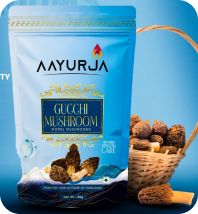
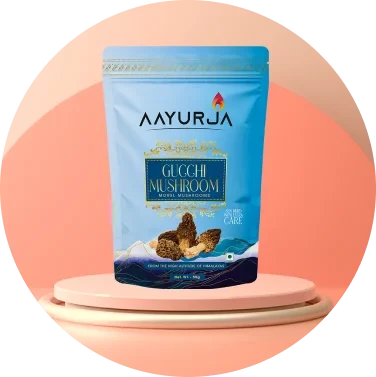
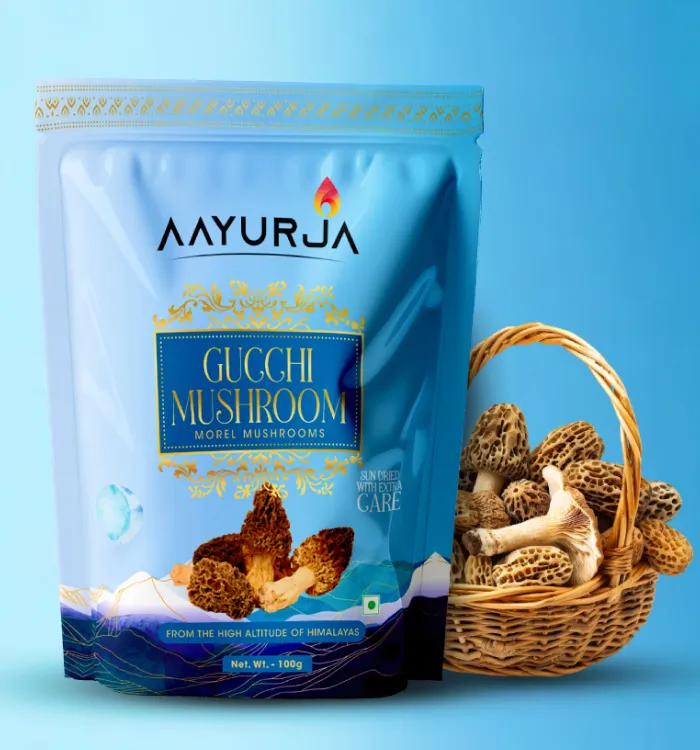
Gucchi Mushroom
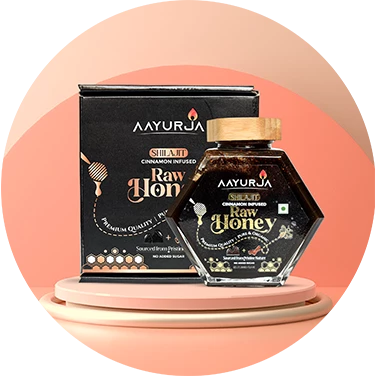















What Makes Honey Truly ‘Natural’? A Deep Dive into Purity, Processing, and Quality Standards in India

Sudesh
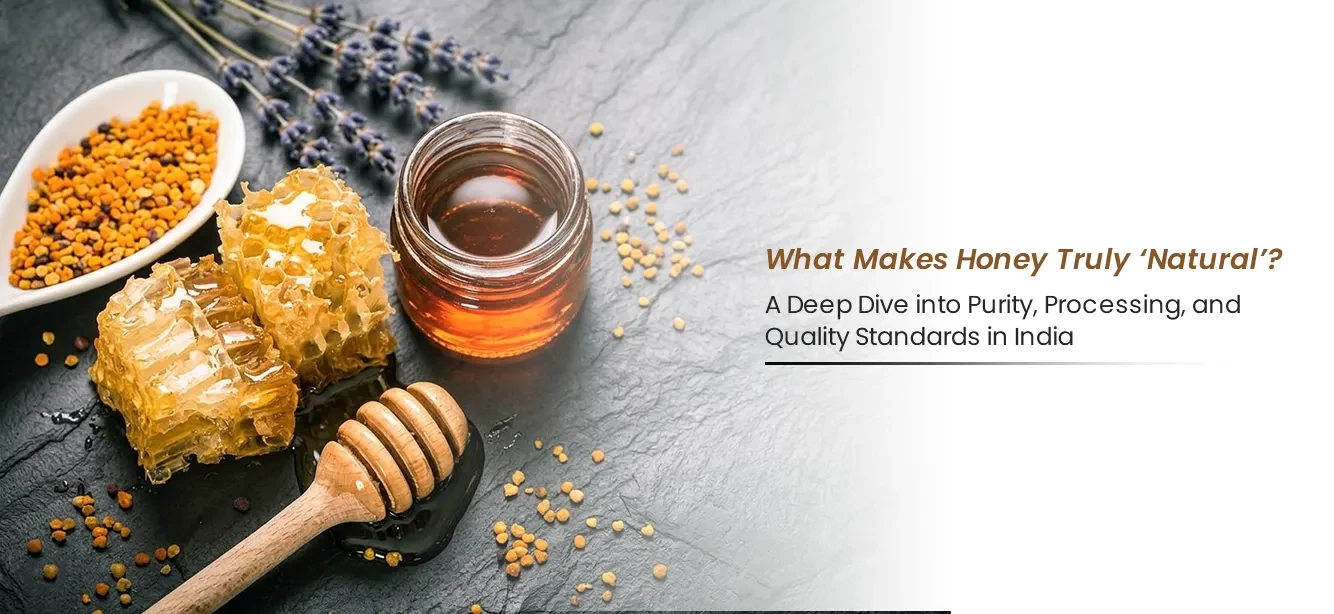
Honey has a strange way of making people nostalgic.
One spoonful and suddenly you are back in your grandmother’s kitchen, watching steam rise from a cup of warm milk while a glass jar of golden honey sat quietly near the window. No branding drama. No flashy labels. Just trust.
Today, things feel different.
Walk into any grocery store, and the honey aisle looks like a battlefield. Raw honey. Forest honey. Organic honey. Wild honey. Natural honey. Every bottle claims purity. Every brand promises authenticity. Yet most consumers still pause for a second and wonder, What does best natural honey even mean anymore?
Fair question.
India’s honey market has exploded over the last decade, fueled by rising awareness around clean eating and conscious sourcing. According to the National Bee Board, India produces over 1.3 lakh metric tonnes of honey annually, making it one of the world’s leading honey-producing nations. That is massive. Yet with growing demand comes growing confusion.
Not all honey is created equally. Some jars stay remarkably close to nature. Others? Not so much.
For brands like Aayurja, the idea is beautifully simple. Let honey remain what it was always meant to be. Pure. Honest. Minimally touched.
Natural Honey Is More Than Just Sweetness
Most people think honey is just another sweetener. It is not.
Natural honey is a living food made by bees, who gather nectar from flowers and pass it through a natural process of taking it to flowers, changing it with natural enzymes, and depositing it in the honeycombs. That journey of flowers is more important than you think.
The taste changes with geography. The aroma changes with seasons. Even the texture can shift depending on the flowers blooming nearby.
That is the beauty of real honey. It refuses to be perfectly identical every single time.
And honestly? That inconsistency is reassuring.
When searching for the best natural honey, consumers often expect crystal-clear golden syrup that pours flawlessly every time. But authentic honey behaves differently. It may crystallize. It may darken slightly over time. One batch may taste floral while another carries deeper earthy notes.
Nature is unpredictable like that.
So, What Actually Makes Honey “Natural”?
This is where things get interesting.
Pure and authentic honey is processed as little as possible after it has been removed from the hive. This means no additional sugar syrups, no artificial flavors and no extra manipulation for looks.
Commercial processing, on the other hand, often prioritizes shelf aesthetics over authenticity. Some products are heated aggressively to delay crystallization and improve visual clarity. Others are ultra-filtered so heavily that much of the natural pollen disappears completely.
Sure, the final product may look smooth and uniform. But something gets lost along the way.
Character.
Natural honey should still feel connected to its source. You should sense the flowers, the season, even the region where it originated.
A spoonful should tell a story.
India’s Honey Diversity Is Seriously Underrated
India is wildly rich in floral diversity, and that directly influences honey quality.
In Uttarakhand, bees forage through forest regions filled with wildflowers and medicinal plants. In Punjab and Haryana, mustard fields create bright, floral honey with a slightly sharp finish. In Bihar, the Lychee is harvested in light, fruitier varieties, and they are delicate and fragrant.
No two parts of the country make the same honey.
This is the reason why India is an essential market for those who want to get the best natural honey in India. This is due to the country's ecological diversity, which gives rise to flavor variations that are layered, nuanced, and deeply connected to the local landscape.
Some honey tastes bold. Some feels buttery soft. Some lingers with herbal warmth long after the spoon is gone.
Honestly, tasting different varieties feels a little like tasting wine. Once you notice the differences, you cannot unnotice them.
The Adulteration Problem Nobody Can Ignore
Now comes the uncomfortable part.
Honey adulteration has become one of the biggest concerns in the Indian food industry. Over the years, multiple reports and independent investigations have raised questions around sugar syrup adulteration in commercially available honey products.
One widely discussed study by the Centre for Science and Environment revealed that several honey samples allegedly passed basic purity tests while still containing adulterants engineered to bypass conventional detection methods.
That changed consumer behavior dramatically.
People stopped blindly trusting labels. They started reading ingredient lists. They began researching sourcing methods and laboratory testing standards.
Rightfully so.
When buyers search for the best organic honey brands, they are no longer just looking for taste. They are looking for transparency.
Why Processing Matters More Than Most Consumers Realize
Here is something many brands conveniently avoid discussing.
Heat changes honey.
Excessive heating may help create a smoother appearance and extend shelf life, but it can also alter natural aroma compounds and delicate characteristics that make honey unique in the first place.
Minimally processed honey retains far more of its original identity. The texture feels richer. The flavor remains layered and complex. There is depth to it.
And yes, it may crystallize faster.
That is not a defect.
In fact, crystallization is often a sign that honey has not been overprocessed. Real honey naturally contains glucose, which tends to crystallize over time, especially in cooler temperatures.
Funny enough, consumers often distrust crystallized honey when they should probably distrust unnaturally perfect honey instead.
Understanding Honey Labels Without Getting Overwhelmed
Buying honey should not feel exhausting, but modern packaging makes things confusing fast.
Words like “pure,” “farm fresh,” and “natural” appear everywhere. Sadly, those words alone do not guarantee quality.
Consumers searching for the best natural honey in India should focus on a few practical things instead:
Check Ingredient Transparency
Good honey should have one ingredient. Honey.
That is it.
No glucose syrup. No added sugars. No unnecessary preservatives hiding behind complicated terminology.
Look for Testing Information
Reputable brands often mention quality testing standards, FSSAI compliance, or third-party laboratory checks. Transparency matters more than clever marketing slogans.
Expect Seasonal Variation
Natural honey changes. One batch may be darker. Another may taste slightly different depending on flowering conditions.
That variation is normal. Honestly, it is reassuring.
Organic Honey vs Natural Honey: Small Difference, Big Confusion
People use these terms interchangeably all the time, but they are not identical.
Natural honey is all about purity and as little processing as possible. Organic honey means more stringent environmental restrictions on the location of the forage and practices in the surrounding areas used for farming.
In order for the honey to be considered organic, the bees generally have to be fed forage areas that are surrounded by a radius where prohibited pesticides and synthetic chemicals are not detected.
This can be difficult in areas of intensive agriculture.
That's why the trusted best organic honey brands stress traceability, ethical sourcing, and the credibility of the honey's certification. Consumers seek to be assured that the product reflects not only a more attractive label, but higher environmental standards.
The Human Side of Honey Production
Each jar represents a whole ecosystem.
Honey isn't the only thing bees produce. They play a vital role in biodiversity and the productivity of agriculture in India as an essential pollinator. Agricultural research shows that bee pollination has a significant effect on the yield of fruits, vegetables, oilseeds, and nuts.
Then there are the beekeepers themselves.
Rural families in thousands rely on sustainable apiculture in order to earn a livelihood and income across India. Ethical sourcing of honey can contribute to a better economic situation for those communities as well as promote better environmental practices.
That perspective changes how you look at honey entirely.
Suddenly, it is not just breakfast anymore.
Aayurja’s Approach to Natural Honey
At Aayurja, natural honey is treated with patience and respect rather than aggressive industrial processing.
The goal is not to create unnaturally uniform honey that looks factory-perfect under supermarket lights. The goal is to preserve authenticity. Real flavor. Real texture. Real floral character.
Because consumers deserve honesty.
And honestly, the modern buyer is far more informed than brands sometimes assume. People ask smart questions now. They care about sourcing. They care about transparency. They care about what enters their kitchens and reaches their families.
That shift is refreshing.
The Future of Natural Honey in India Looks Promising
Something important is happening in India’s food culture right now.
Consumers are moving away from blind consumption and toward conscious choices. They are researching brands carefully. They are questioning labels. They are prioritizing authenticity over polished marketing narratives.
That is good news for genuinely responsible honey producers.
The demand for the best natural honey and trusted organic honey brands will likely continue growing as awareness around purity and ethical sourcing becomes stronger. And honestly, that feels long overdue.
Because real honey was never supposed to be artificial, overdesigned, or stripped of personality.
It was always meant to taste like nature itself.
FAQs
Which is considered the best natural honey for everyday use?
The best natural honey is typically minimally processed, free from additives, and sourced transparently from trusted beekeepers. Good-quality honey may crystallize naturally over time, which often indicates authenticity rather than spoilage or poor quality in the product itself.
How do consumers identify the best natural honey in India?
To find the best natural honey in India, buyers should check ingredient transparency, sourcing details, FSSAI compliance, and third-party purity testing. Natural variation in taste, texture, and color is completely normal because floral sources and seasonal conditions constantly change.
Are the best organic honey brands worth choosing?
Many consumers prefer the best organic honey brands because they usually follow stricter sourcing standards and environmentally conscious beekeeping practices. Organic certification can provide additional assurance regarding pesticide exposure, ethical production methods, and overall transparency throughout the honey harvesting process.
Why does the best natural honey sometimes become thick or grainy?
The best natural honey may crystallize due to natural glucose content interacting with temperature changes over time. This process is completely normal and often suggests minimal processing. Crystallized honey can easily return to liquid form when warmed gently in water.
What makes the best organic honey brands more trustworthy today?
Consumers trust the best organic honey brands when they openly share sourcing practices, quality testing standards, and certification details. Honest labeling, ethical beekeeping partnerships, and transparent production methods help customers make informed choices in today’s increasingly competitive honey market.




More Related Blogs






Real Organic Herbal

Original Product

30 Days Warranty

Global Shipping

100% Secure





 Resend Code