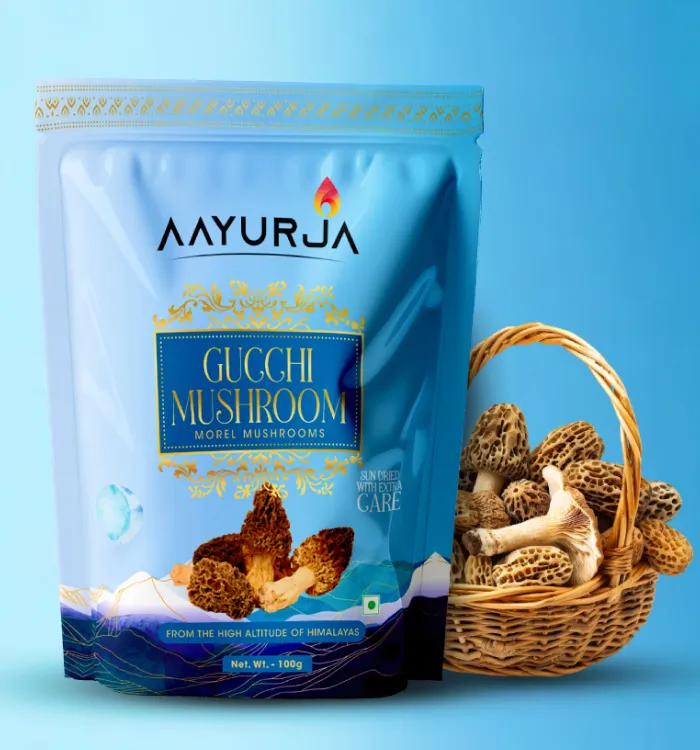
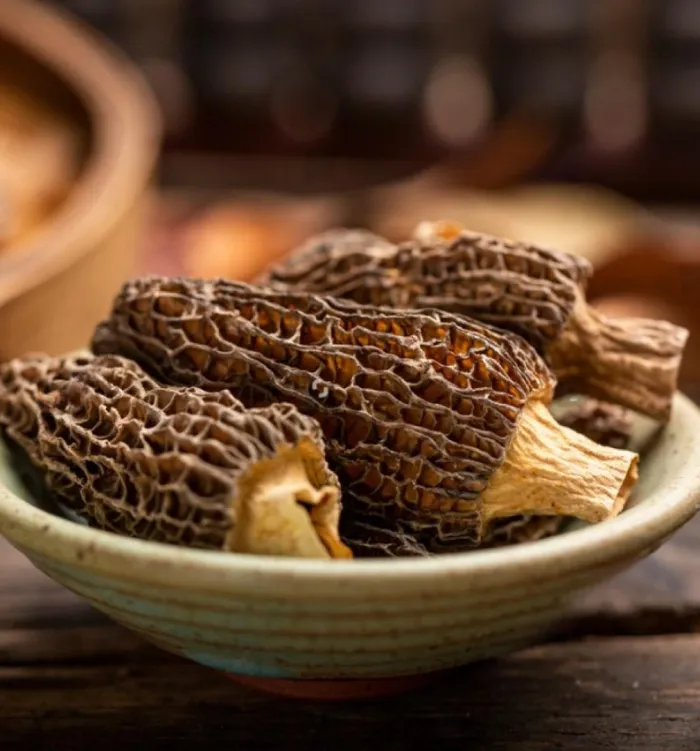
Gucchi Mushroom











Understanding Lipid Health: What Your Lipid Profile Really Means

Sudesh
Some numbers shout. Lipid numbers whisper.
That is exactly why a lipid profile can feel so confusing. You get a report filled with LDL, HDL, triglycerides, total cholesterol, and maybe a quiet little surge of panic follows. Fair enough. Most people are not taught how to read those numbers in plain language, and honestly, they should be. Lipid health is not just about one scary value circled in red. It is about patterns, habits, balance, and the kind of daily choices that seem tiny until they are not. Around 39% of adults globally are estimated to have raised total cholesterol, and high cholesterol is linked to 4.4 million deaths every year worldwide. That is not a niche wellness topic. That is a global conversation. World Heart Federation
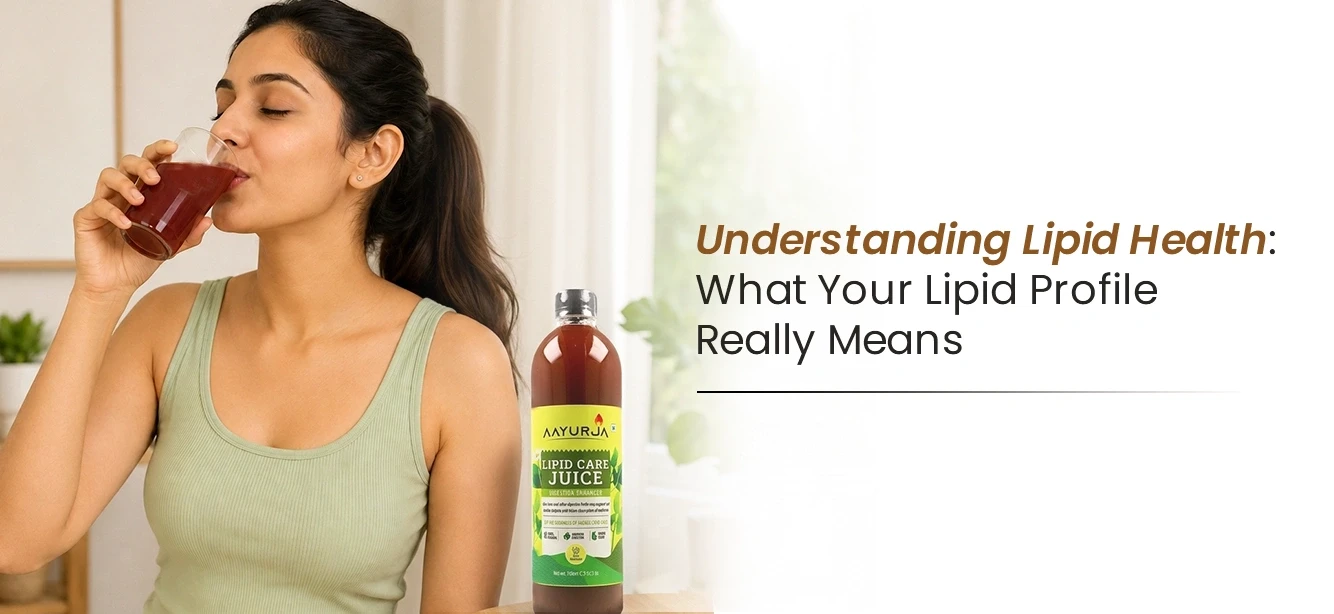
Aayurja is developed with modern lifestyle risks in mind. Lipid Care Herbal Juice offers daily support for lipid health because wellness is best maintained through care, not waiting for a cure.
What Is a Lipid Profile, Really?
A lipid profile is basically your body’s fat-traffic report. It gives you a snapshot of how different fats and fat-carrying particles are moving through your bloodstream, and that matters because your body needs fats, just not chaos. The test usually helps you understand whether cholesterol is being carried more protectively, a riskier way, or somewhere in the messy middle where lifestyle starts to matter a lot more than people think. CDC
The Three Numbers Most People Hear About, But Rarely Understand
Let’s strip the jargon away. LDL is often called “bad” cholesterol because high levels can build up in artery walls over time. HDL is the “good” one because it helps carry cholesterol back to the liver. Triglycerides are a type of fat your body uses for energy, but when they rise alongside high LDL or low HDL, the picture gets more complicated. The point is simple. No single number lives alone. Your lipid profile behaves more like a team, and sometimes the team chemistry is the real story. American Heart Association
“Normal” Does Not Always Mean Fine
Here is where it gets interesting. People often assume that if total cholesterol looks acceptable, all is well. Not always. A person can still have an imbalanced pattern if triglycerides are elevated or HDL runs low. That is why lipid health should be read like a paragraph, not a headline. Even the World Heart Federation points out that high triglycerides combined with low HDL and high LDL can raise cardiovascular risk, which means context matters more than shortcuts. Honestly, wellness becomes far more useful when we stop hunting one villain and start noticing the whole pattern. World Heart Federation
Lipid Imbalance Nobody Really Feels Coming
The tricky part? Lipid imbalance is usually quiet. No dramatic entrance. No theatrical warning bells. Familial hypercholesterolemia, an inherited condition linked to very high cholesterol, affects about 34 million people worldwide, and many cases remain underdiagnosed. That is one of the reasons routine awareness matters so much. You may feel perfectly normal while your report tells a more nuanced story. Not scary, just real. Numbers are often early signals, and early signals are useful because they give you time to respond with awareness rather than urgency. World Heart Federation
What Actually Influences Lipid Health in Real Life?
More than most people want to admit. Food choices matter, yes, but so do movement, smoking, stress, alcohol habits, sleep patterns, age, genetics, and body weight. It is never just one thing. That is why all-or-nothing thinking usually fails here. You do not overhaul your life because of one report and suddenly become a different person by Tuesday. You build better routines. The CDC and World Heart Federation both emphasize healthy eating patterns, physical activity, smoking cessation, and regular screening as part of staying on top of cholesterol health. Boring advice? Maybe. Effective? Usually, yes. CDC World Heart Federation
“Care” Matters More Than “Cure”
This is where brand conversations should be more responsible, not louder. Lipid wellness is not a magic-fix category, and it should never be sold like one. It is a care category. A support category. A consistency category. When people look for better routines, they are often looking for something sustainable, something that fits into everyday life without drama. That is where thoughtful products can enter the picture, not as miracle promises, but as part of a wider wellness rhythm that includes food, movement, mindfulness, and regular health guidance.
Why Herbal Thinking Still Appeals to Modern Wellness Consumers
People are tired of extremes. They want routines they can live with. They want labels they can read. They want wellness to feel less clinical and more integrated into everyday life. That is one reason interest in Natural lipid care keeps growing. Not because nature should replace professional medical advice, but because many people genuinely prefer adding plant-forward, habit-friendly rituals to their lifestyle. A well-positioned Herbal Juice for Cholesterol fits into that modern mindset when it is discussed responsibly, without fear tactics and without overpromising outcomes. It becomes part of the bigger wellness picture, not the whole frame.
Reading Your Report With More Calm
If your lipid profile ever leaves you staring at a page like it is written in another language, pause. Breathe. Ask better questions. What is my LDL doing? How is my HDL looking? What about triglycerides? Are my routines helping or hurting? That shift alone changes everything. A report is not a verdict. It is feedback. And feedback, when you listen to it properly, can be incredibly useful. Sometimes the smartest wellness move is not panic. It is perspective.
Aayurja and the Rise of Natural Lipid Care
At Aayurja, the conversation around wellness feels rooted in daily support, not exaggerated claims. Its Lipid Care Herbal Juice is positioned as a holistic option for people exploring plant-based wellness rituals, with ingredients such as Arjuna, Guggul, Amla, and Giloy. The brand highlights qualities like being free from additives, sugar, and synthetic preservatives, while framing the formula around cardiovascular wellness, internal balance, and long-term lifestyle support. That tone matters. It feels calmer, cleaner, and frankly more trustworthy.
FAQs
What is Lipid Care Herbal Juice, and who might explore it?
Lipid Care Herbal Juice is a plant-based wellness formulation positioned for daily lifestyle support. People exploring mindful nutrition, balanced routines, and herb-led habits may consider it as part of a broader wellness plan, alongside movement, sensible eating, and regular professional health guidance.
Can a Herbal Juice for Cholesterol replace healthier lifestyle habits?
No, that would be the wrong way to look at it. A Herbal Juice for Cholesterol is better viewed as a supportive lifestyle addition, not a substitute for nutritious meals, physical activity, routine screening, stress management, or advice from a qualified healthcare professional.
What does Natural lipid care actually mean in practical terms?
Natural lipid care usually refers to a wellness approach built around balanced eating, regular movement, plant-based support, and mindful daily habits. It is less about quick fixes and more about creating a sustainable rhythm that supports overall cardiovascular awareness and long-term lifestyle consistency.
How should someone use Lipid Care Herbal Juice in a sensible wellness routine?
The smartest approach is simple. Use Lipid Care Herbal Juice as one part of a grounded routine that also includes whole foods, regular activity, hydration, sleep, and check-ins with a healthcare professional. Wellness works better when habits connect instead of competing.
Is a Herbal Juice for Cholesterol meant for instant results?
Not really, and expecting instant transformation usually leads to disappointment. A Herbal Juice for Cholesterol fits better into a slow, steady wellness mindset where consistency matters more than speed, and where supportive habits are valued for rhythm, not unrealistic overnight promises.



More Related Blogs




Real Organic Herbal

Original Product

30 Days Warranty

Global Shipping

100% Secure



 Resend Code